Still water
Moss, bridge, maple
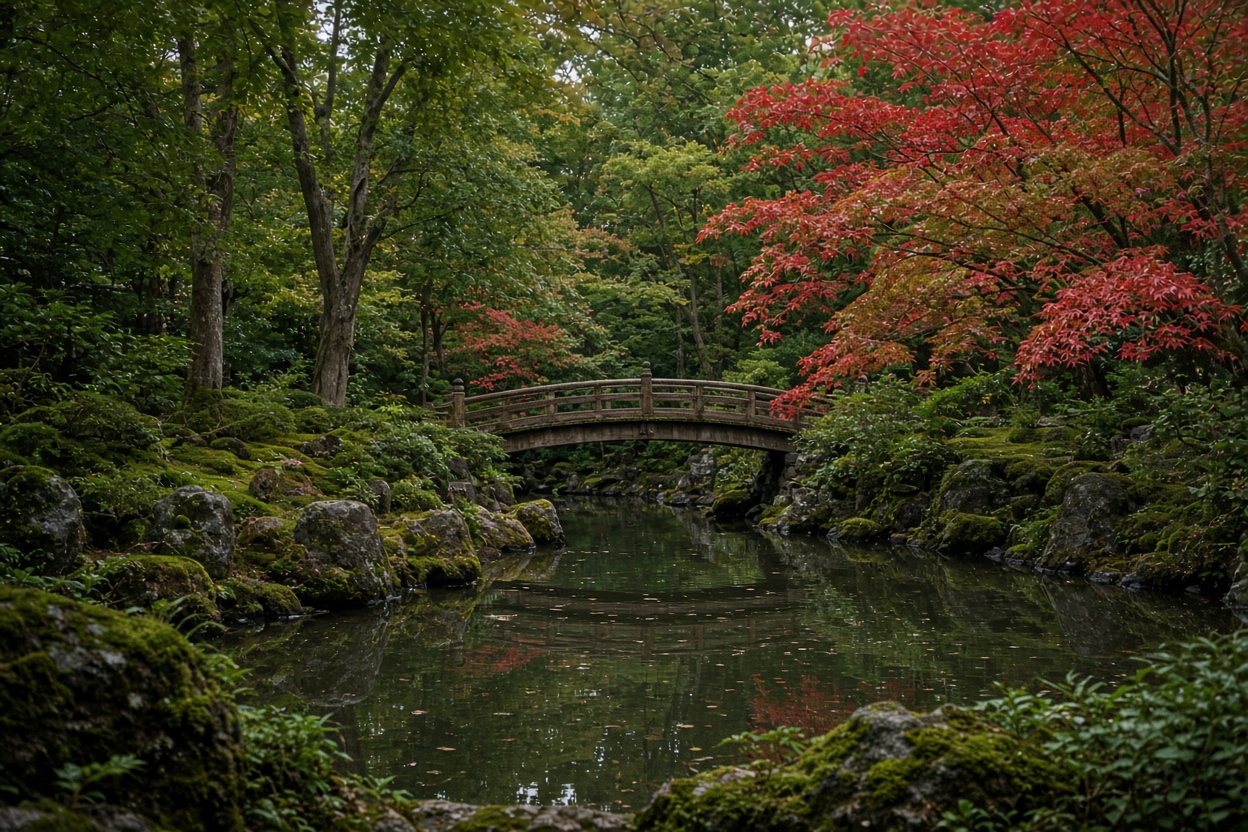
The Japanese garden is the quiet room. Moss, a bridge, a red maple, and water that does not ask you to keep moving. I go there when the roses have been enough noise.
Moss underfoot
Moss likes this corner because the light is broken and the ground stays cooler. It runs between stones and up to the edge of the path. Step off onto it and you are being rude. The path is the path, and the moss is the ground you came to see.
In winter the moss is the main green. Rain makes it deep and bright with no flower helping. In a dry August it dulls, and you see how much of the calm depends on water, from the sky or from a hose that ran before you arrived.
The bridge and the red maple
The bridge is short. It lifts you over a narrow piece of water and sets you down. I stand in the middle longer than the crossing needs, because from there the maple reads against the pond instead of against other trees.
A red maple does its loud work in autumn, but the tree is worth the stop in summer for the cut of the leaf and the shade it puts on the water. I do not need the red. The shape is enough on a green day.
When the wind drops
When the wind drops, the pond holds the maple and the bridge in one reflection. Fish may move. I do not come for the fish. I come for the moment the surface goes flat and the garden doubles.
A heron sometimes works this water. If one is there I stop talking. If none is there, the pond is still the point. Stillness is the planting scheme, more than any shrub.
Quieter than the roses
People lower their voices on this path, or they do not, and you notice the ones who do not. The design is doing something the rose arches never attempt. It makes room for a small view to last.
I stay until I have seen the bridge from both ends. Then I leave. Stay too long and the pond becomes a bench you are occupying. The next person deserves the same empty minute you wanted.